
HIFU Center
Not every uterine condition needs surgery.
Why it matters
Enduring pain is not the same as getting better.
Symptoms and imaging both matter. Some uterine conditions remain stable, while others change; pain alone cannot tell you whether a fibroid or adenomyosis has improved.
Persistent pain or heavy bleeding deserves assessment. Observation may be appropriate in some cases, while medication, a procedure or surgery may be considered in others. HIFU is not needed for every diagnosis.
That is why the most important step is to know, accurately, the current state of your uterus.
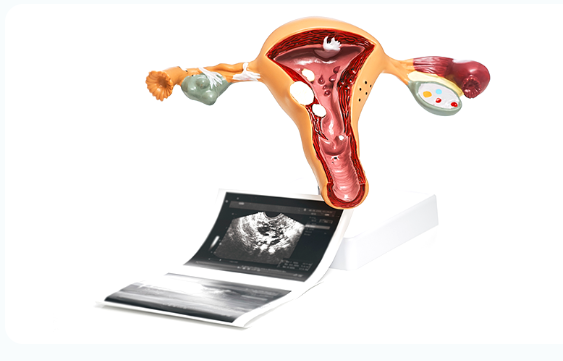
How we decide
“What is the best treatment for you, in your current condition?”
We actively proceed with non-surgical treatment only when all three criteria are met.
- 01
Is the diagnosis clear, and does your medical history support the proposed treatment?
- 02
Is the three-dimensional structure of the lesion — its position and size — suitable for non-surgical treatment?
- 03
Can your main symptoms realistically be improved by non-surgical treatment?
Treatment options
Non-surgical care is not one-size-fits-all.
HIFU for Uterine Fibroids
Focused ultrasound energy is concentrated on the fibroid from outside the body, without an incision, to reduce the tissue causing symptoms.
HIFU for Adenomyosis
For suitable cases of adenomyosis, HIFU may be considered to address the affected tissue while preserving the uterus.
Uterine Vascular Treatment
An interventional approach that targets the blood supply of uterine lesions, considered for specific patterns of disease.
Lesion Ablation
A minimally invasive approach to treat certain lesions directly, chosen according to their location and size.
Hysteroscopic Procedures
For lesions inside the uterine cavity, a hysteroscope allows treatment through the natural canal without abdominal incisions.
This information is general education only and does not replace an individual medical assessment. Suitability, risks, recovery and outcomes vary by person, and no particular result can be guaranteed.
How HIFU works
No scalpel — only focused ultrasound energy on the lesion.
Remember focusing sunlight through a magnifying glass to burn paper? HIFU starts from the same principle. High-intensity ultrasound is sent from outside the abdomen and concentrated on a single focal point, and that heat is used to selectively treat fibroid or adenomyosis tissue — without surgery.
| Surgery (myomectomy / hysterectomy) | Barungil HIFU | |
|---|---|---|
| Incision | Depends on the surgical approach | No surgical incision; burns and other complications remain possible |
| Anaesthesia | Depends on the procedure; often general anaesthesia | Sedation and pain control are individually planned |
| Uterus | Myomectomy preserves the uterus; hysterectomy removes it | Aims to treat selected tissue while retaining the uterus |
| Return to daily life | Varies by surgical approach and individual recovery | Often shorter recovery, but discharge and activity limits vary |
| Pregnancy planning | Individual advice after the chosen procedure | Pregnancy outcomes are uncertain; individual advice is essential |
Recovery time and anaesthesia may vary with each patient’s health.
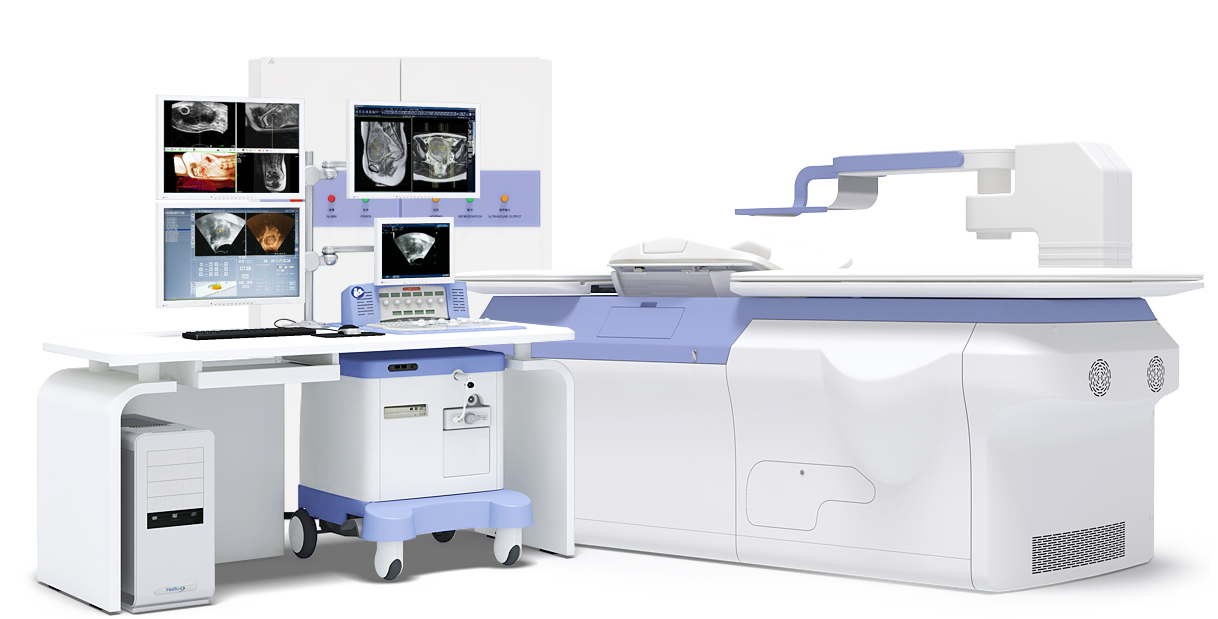
The system
A platform built for the uterus.
Treatment is delivered from a single dedicated uterine HIFU platform. You lie on the treatment bed while imaging and therapy work together from one position — no incision, and no instrument entering the body.
- Imaging screens at the workstation show ultrasound, MRI and the treatment plan together, so the focal point is confirmed before any energy is released.
- The therapy transducer sits in a water basin within the bed and delivers focused ultrasound through the abdominal wall, guided in real time.
- A mobile ultrasound console stays beside the bed, so the same team can image and verify the lesion immediately before and after treatment.
Why Barungil
Why your HIFU should be at Barungil.
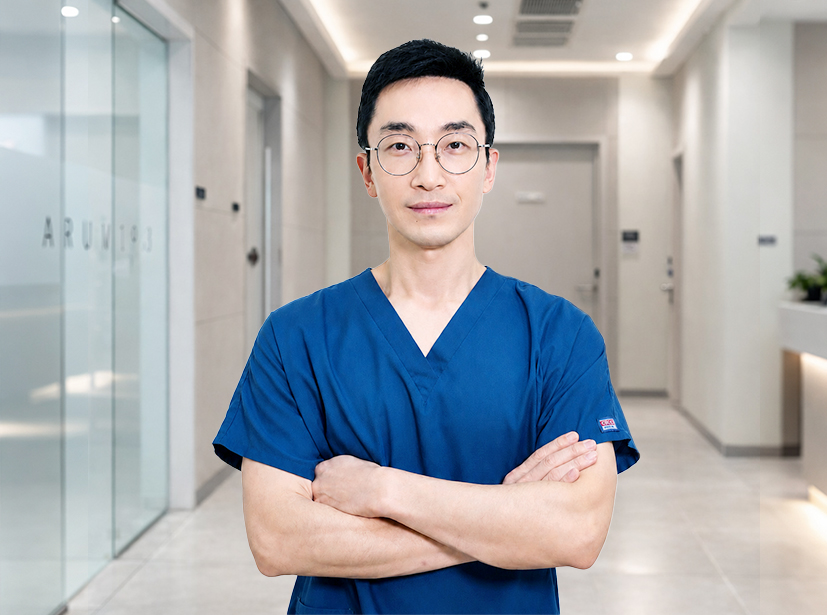
01
Experience informs the treatment plan.
The clinic reports that Dr. Kil has personally performed more than 2,400 HIFU procedures, excluding supervised cases. This describes procedural experience, not a success rate or a guarantee of an individual outcome.
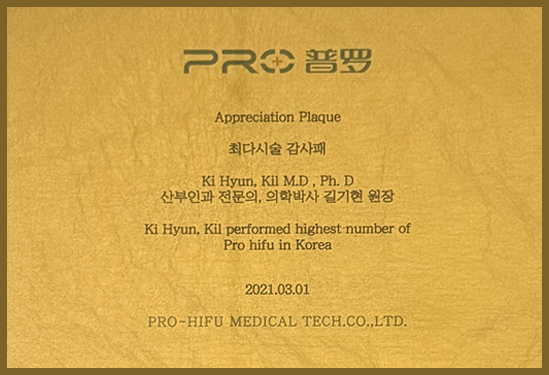
02
Precision comes from the equipment.
We use the Chongqing HIFU JC200D, a dedicated uterine system with a fine, precise focal zone — reducing the burden on surrounding healthy tissue.
03
Diagnosis comes before a treatment decision.
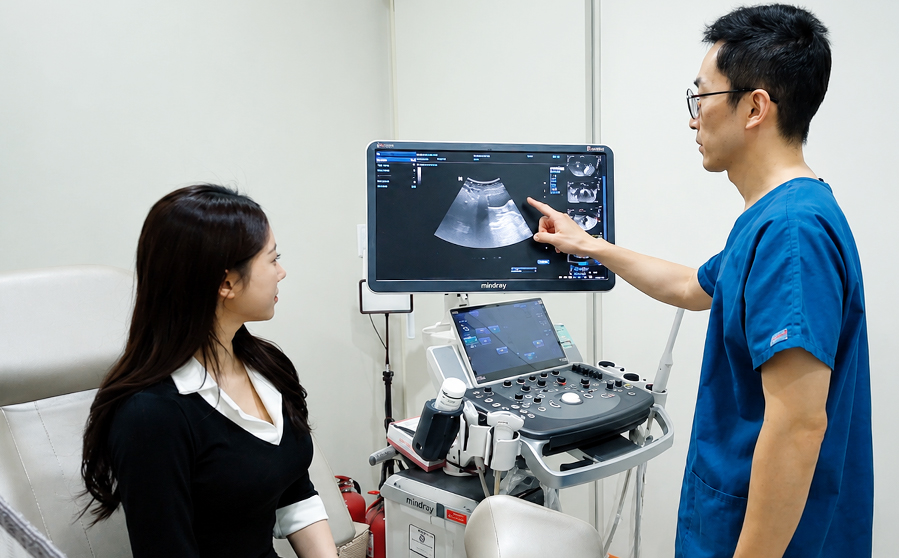
Barungil's pre-treatment planning includes ultrasound and pelvic MRI to assess the lesion. Imaging, symptoms and medical history help determine whether HIFU or another option is appropriate.
Adenomyosis HIFU
Different roots, so the treatment detail must differ.
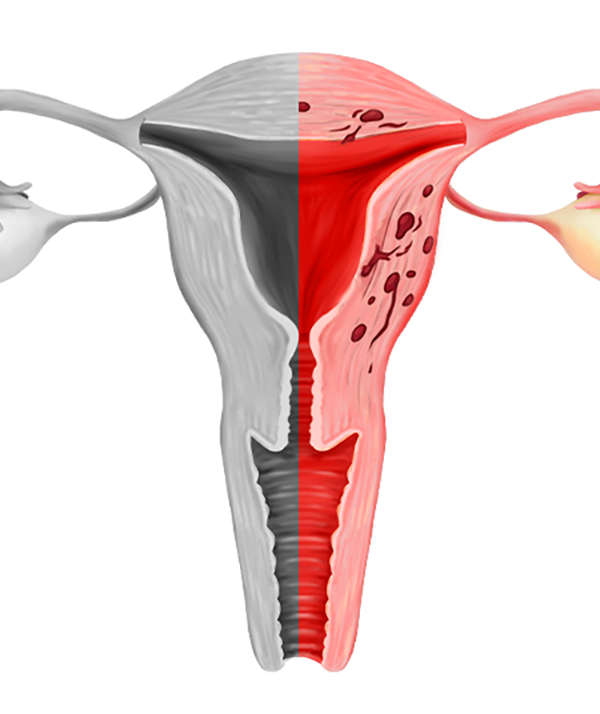
Many patients arrive thinking adenomyosis is a fibroid, but they are different conditions. A fibroid usually has a clear border; in adenomyosis, endometrial tissue seeps between the normal muscle layers, making the uterine wall swollen and enlarged — which also makes it harder to diagnose.
Treating it demands more precision: combining MRI with real-time treatment ultrasound to map the lesion in 3D, then selectively treating the diffused tissue while preserving as much healthy uterus as possible.
| Medication / hormones | Hysterectomy | Barungil HIFU | |
|---|---|---|---|
| Goal | Temporary pain relief and symptom control | Removal of the uterus | Selective treatment of the lesion with ultrasound energy |
| Physical burden | No surgical incision; drug side effects are possible | Anaesthesia and risks depend on the surgical approach | No surgical incision; sedation and procedural risks remain |
| Uterus preserved | Yes | No | The aim is to retain the uterus; individual suitability matters |
| Recovery | No procedural recovery; response and side effects vary | Varies by surgical approach and individual recovery | Discharge and activity limits are individualised |
| Notes | Symptoms may return when medication stops | Removes the uterus; fertility implications require discussion | Evidence and response vary; recurrence or further treatment is possible |
After treatment
Real care begins after the procedure.
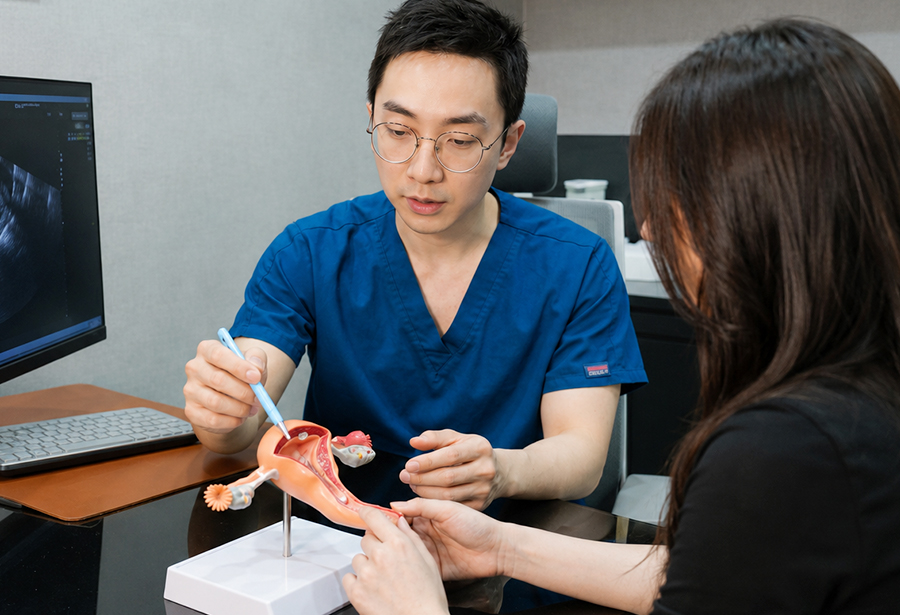
Treating the lesion is not the end. What matters more is that treated tissue is absorbed smoothly and a healthy uterine environment is maintained. With regular ultrasound check-ups, Dr. Kil follows your recovery closely — from first diagnosis to procedure and monitoring for persistent or recurrent symptoms. Follow-up does not guarantee complete absorption, symptom relief or prevention of recurrence.
This is the heart of our lifelong-physician system.
Questions before treatment
Uterine HIFU: suitability, evidence and realistic expectations
- What is uterine HIFU, and how is it guided at Barungil?
HIFU concentrates ultrasound energy to heat selected uterine tissue without an incision. Barungil uses the JC200D system with real-time ultrasound guidance; pelvic MRI is used in pre-treatment planning. Having an MRI beforehand does not make the procedure MRI-guided HIFU. Ultrasound-guided and MRI-guided HIFU have different evidence assessments.
- Is HIFU suitable for every fibroid or for adenomyosis?
No. Symptoms, imaging, lesion size and location, the treatment path and pregnancy plans affect suitability. A consultation should compare observation, medication and procedural or surgical options. Adenomyosis is a different condition from fibroids; the NICE fibroid guidance linked below does not establish effectiveness for adenomyosis. Its treatment requires a separate discussion of evidence and uncertainty.
- What are the limitations and risks of ultrasound-guided HIFU?
NICE describes limited evidence on effectiveness and recommends regular checks. Symptoms may persist or return, and another treatment may be needed. Skin burns are a recognised risk, and serious complications are possible. Individual consent should cover the planned procedure, alternatives and risks rather than treating incision-free care as risk-free.
- Does preserving the uterus guarantee fertility or an earlier pregnancy?
No. Keeping the uterus does not guarantee fertility, a safe pregnancy or a shorter wait before trying to conceive. NICE describes uncertainty about subsequent pregnancy. Discuss your reproductive goals before choosing treatment; the timing of pregnancy and follow-up must be individualised.
Sources & clinical context
- NICE · Ultrasound-guided HIFU for symptomatic uterine fibroids
Patient information on ultrasound-guided fibroid treatment, limited evidence, risks and follow-up; not guidance for adenomyosis.
- NICE · MRI-guided HIFU for uterine fibroids
A different imaging-guided procedure; its evidence assessment must not be applied interchangeably to ultrasound-guided HIFU.
Clinic-specific descriptions are supplied by Barungil. Independent sources explain general evidence and limitations; they do not endorse this clinic or establish results for its treatment programme. This page is educational and does not replace an individual consultation.
Treating clinician: Dr. Ki Hyon Kil · OB/GYN specialist since 2009